Step back before you inspect the surface
From a distance, texture disappears before silhouette does. That makes the outer contour the first test for an object intended to hold its own in a room or on a display surface.
Look for a line that remains recognizable when the small knots and grain are no longer obvious.
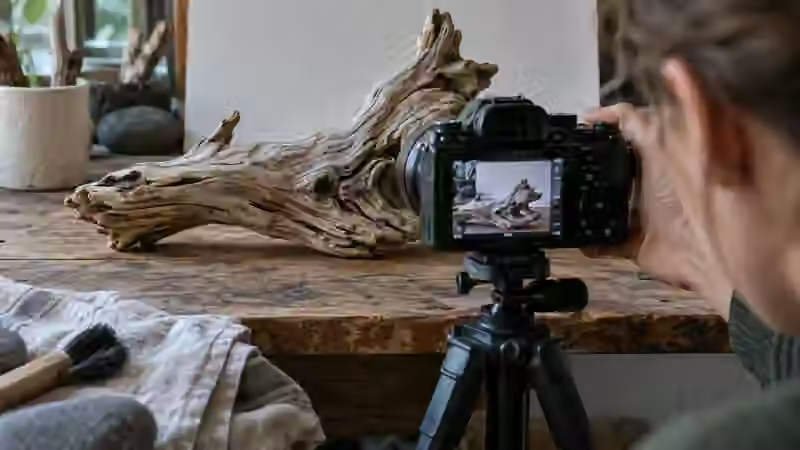
The wall and tabletop are part of the image
A strong gap between two branches may disappear against a busy background. A low branch may feel heavier when it nearly touches the tabletop. Evaluate the piece with the surrounding empty space included, not as an isolated cutout.
Choose one primary viewing direction
A natural object can look compelling from several angles, but a display still benefits from a primary view. Find the orientation that gives the outer contour the clearest rhythm, then treat alternate views as secondary rather than trying to optimize every side equally.