Read the gaps before the branches
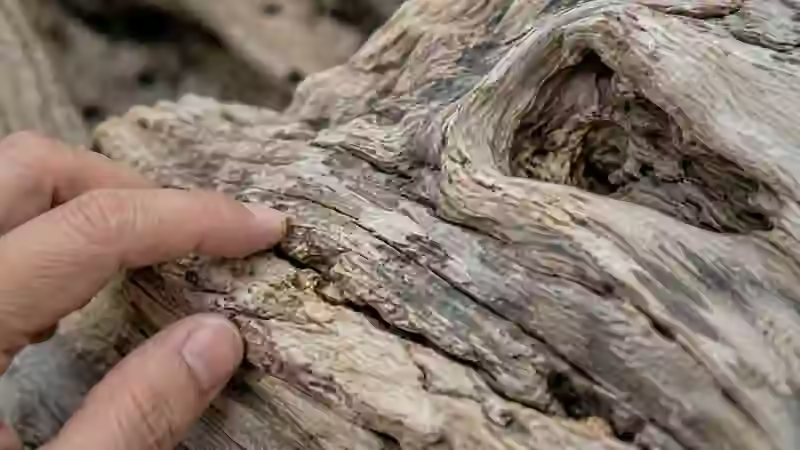
It is easy to focus on the wood because it is the object you are placing. Try the opposite approach first: look at the empty shapes created between the branches, beneath an arch and around the outer silhouette.
Those gaps determine whether the composition feels open, compressed, directional or static. They also help you see where later plant mass or stone might be able to sit without erasing the original form.
Give the eye a route through the scene
A strong piece often creates more than one possible visual path. One branch may lead upward while another points back toward a lower opening. Choose which path you want to emphasize and avoid blocking every opening at once.
- Keep at least one clear opening visible from the main view.
- Use plant mass to support a direction rather than cover the full silhouette.
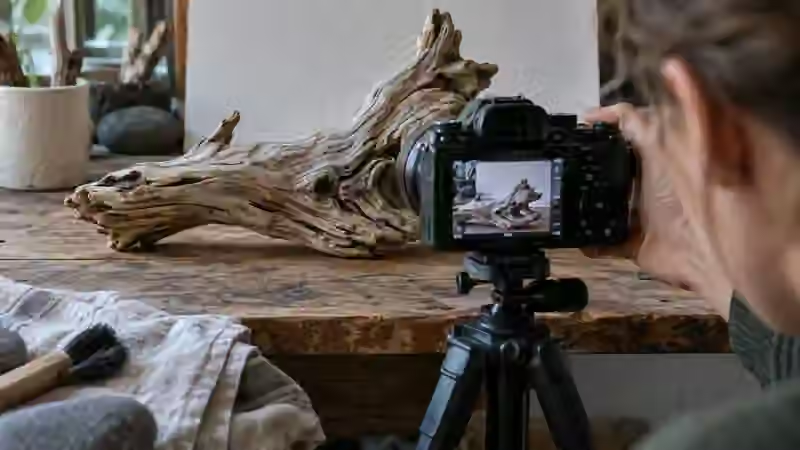
- Check the composition from the actual viewing height, not only from above.
Placement comes before decoration
This is a visual-composition method, not a biological compatibility claim. Once the main form is placed, substrate, stone and plants can be considered in relation to the structure that is already working.